
/prod01/channel_8/media/scu-dep/current-students/images/Coffs-harbour_student-group_20220616_33-147kb.jpg)
/prod01/channel_8/media/scu-dep/current-students/services/counselling/images/RS21533_English-College-Student_20191210_DSC_6961-117kb.jpg)
/prod01/channel_8/media/scu-dep/study/scholarships/images/STEPHANIE-PORTO-108-2-169kb.jpg)
/prod01/channel_8/media/scu-dep/study/arts-and-humanities/images/RS20958_Chin-Yung-Pang-Andy_20190309__79I5562-960X540.jpg)
/prod01/channel_8/media/scu-dep/experience/images/SCU-INTNL-STUDY-GUIDE-280422-256-72kb.jpg)
/prod01/channel_8/media/dep-site-assets/component-library/screenshots/online-1X1.jpg)
The Morrison government wants to suck CO₂ out of the atmosphere. Here are 7 ways to do it
Categories
Share
/prod01/channel_8/media/scu-dep/news/images/2020/The-Conversation-CO2-720X475.jpg)
, ; , ; , ; , , and ,
Federal Energy Minister Angus Taylor is on Tuesday the Morrison government’s first Low Emissions Technology Statement, plotting Australia’s way forward on climate action. It’s to include “negative emissions” technologies, which remove carbon dioxide (COâ‚‚) from the air.
The Intergovernmental Panel on Climate Change negative emissions technologies will be needed to meet the Paris Agreement goal of limiting warming to well below 2℃. In other words, just cutting emissions is not enough – we must also take existing greenhouse gases from the air.
Last week, the government broadened the remit of the Australian Renewable Energy Agency (ARENA) and the Clean Energy Finance Corporation (CEFC). It flagged negative emissions technologies, such as soil carbon, as one avenue for investment.
Some negative emissions ventures are operating in Australia at a small scale, including carbon capture, and . Here, we examine seven ways to remove COâ‚‚ from the atmosphere, including their pros and cons.
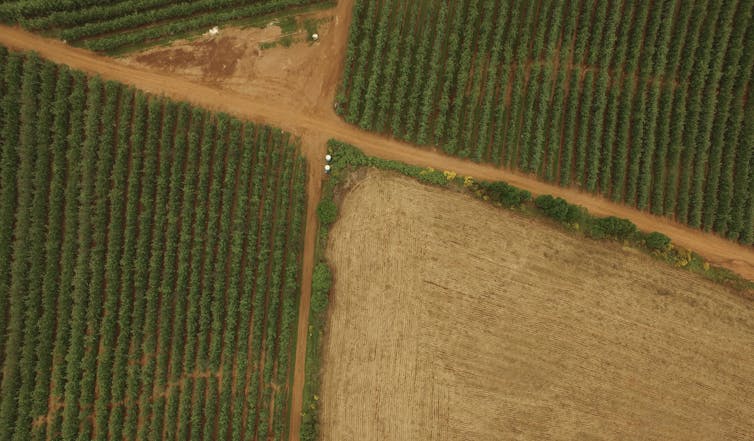
1. Managing soil carbon
Up to of soil carbon has been lost globally since farming began to replace natural forests and grasslands. Improved land management could store or “sequester” up to of COâ‚‚ each year. It could also improve .
Soil carbon can be built through methods such as:
- “” farming, using techniques that don’t disturb soil
- planting , which protect soil between normal cropping periods
- grazing livestock on , which last longer than annual plants
- applying lime to encourage plant growth
- using compost and .
It’s important to remember though, that carbon can be hard to store in soils for long periods. This is because microbes consume organic matter, which releases carbon back to the atmosphere.
2. Biochar
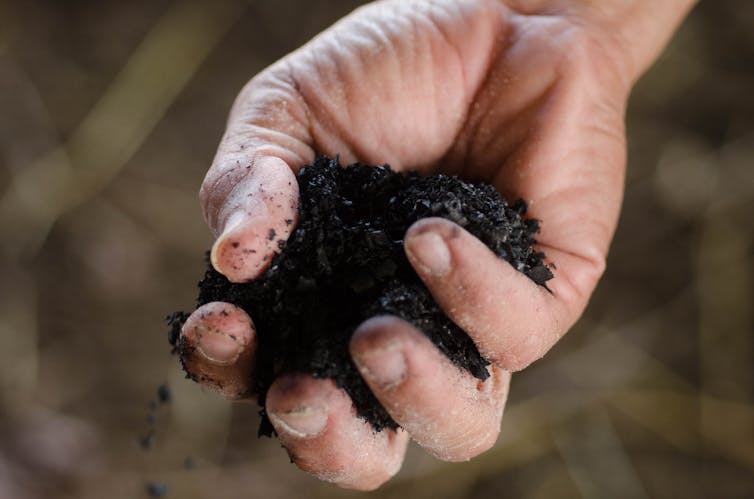
Biochar is a charcoal-like material produced from organic matter such as green waste or straw. It is added to soil to , by promoting and (soil clumps) which prevents organic plant matter breaking down and releasing carbon.
Biochar has been used by to increase food production. More than 14,000 biochar studies have been published since 2005. This includes showing how biochar reacts with soil minerals, microbes and plants to improve soil and stimulate plant growth.
Read more:
On average, biochar increases crop yields by about and halves emissions of nitrous oxide, a potent greenhouse gas. The production of biochar releases gases that can generate renewable heat and . Research suggests that globally, biochar could store of COâ‚‚ each year.
However its potential depends on the availability of organic material and land on which to grow it. Also, the type of biochar used must be suitable for the site, or crop yields may fall.
3. Reforestation
Planting trees is the simplest way to take COâ‚‚ from the atmosphere. Reforestation is limited only by land availability and environmental constraints to growth.
Reforestation could sequester up to of °ä°¿â‚‚. However, carbon sequestered through reforestation is vulnerable to loss. For example, last summer’s devastating bushfires released around 830 million tonnes °ä°¿â‚‚.
4. Bioenergy with carbon capture and storage (BECCS)
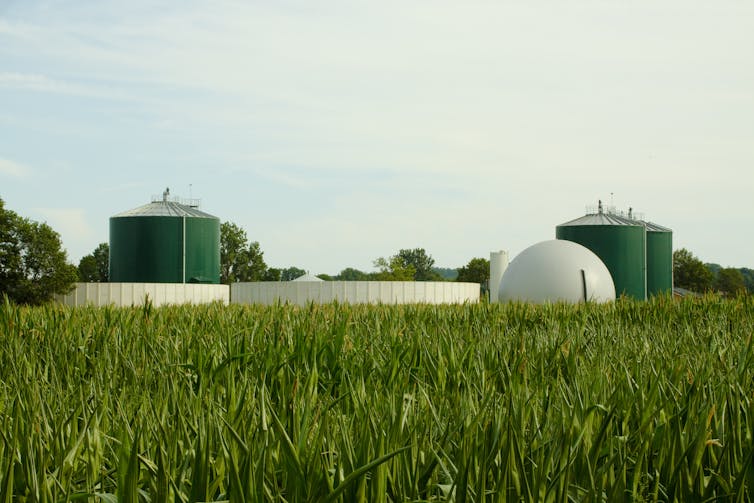
Plant material can be burned for energy – known as bioenergy. In a BECCS system, the resulting COâ‚‚ is captured and stored deep underground.
Currently, carbon capture and storage (CCS) is only viable at large scale, and opportunities for storage are . Only a few CCS facilities operate .
BECCS has the potential to sequester annually. But this is limited by availability of material to burn – which in theory could come from forestry and crop waste, and purpose-grown plants.
The large-scale deployment of CCS will also have to barriers such as high costs, challenges in dealing with leaks, and determining who takes long-term responsibility for the stored carbon.
5. Enhanced weathering of rocks
Silicate rocks naturally capture and store COâ‚‚ from the atmosphere when they weather due to rain and other natural processes. This capturing can be accelerated through “” – crushing rock and spreading it on land.
The preferred rock type for this method is basalt – nutrient-rich and abundant in Australia and elsewhere. A recent estimated enhanced weathering could store up to four billion tonnes of COâ‚‚ globally each year.
However low rainfall in many parts of Australia limits the rate of carbon capture via basalt weathering.
6. Direct air carbon capture and storage (DACCS)
Direct air carbon capture and storage (DACCS) uses chemicals that bond to ambient air to remove °ä°¿â‚‚. After capture, the COâ‚‚ can be injected underground or used in products such as building materials and plastics.
DACCS is in early stages of commercialisation, with operating globally. In theory, its potential is unlimited. However major barriers include high costs, and the large amount of energy needed to operate large fans required in the process.
7. Ocean fertilisation and alkalinisation
The ocean absorbs around of COâ‚‚ from the air each year.
The uptake can be enhanced by fertilisation – adding iron to stimulate growth of marine algae, similar to reforestation on land. The ocean can also take up more COâ‚‚ if we add alkaline materials, such as silicate minerals or lime.
However ocean fertilisation is seen as a , and will be challenging to regulate in international waters.
Looking ahead to a zero-carbon world
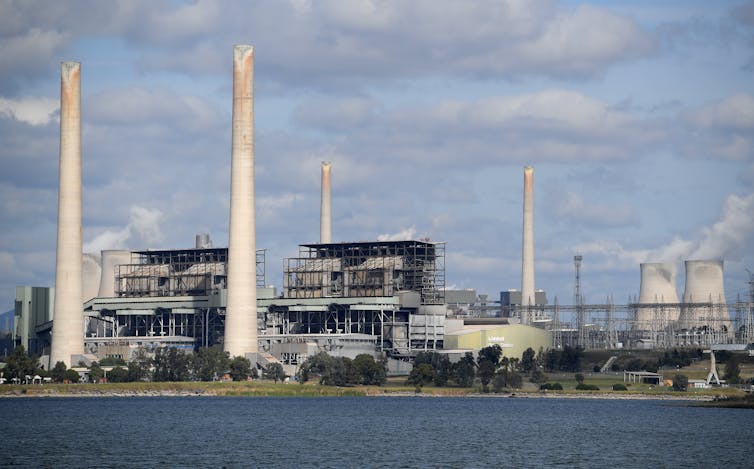
The foreshadowed government investment in negative emissions technologies is a positive step, and will help to overcome some of the challenges we’ve described. Each of the technologies we outlined has the potential to help mitigate climate change, and some offer additional benefits.
But all have limitations, and alone they will not solve the climate crisis. Deep emissions reduction across the economy will also be required.
Read more: 
, Adjunct Professor, ; , Research academic, ; , Adjunct Professor, ; , Visiting Professor, School of Material Science and Engineering, , and , Postdoctoral fellow,
This article is republished from under a Creative Commons license. Read the .
Keep reading
All Media ReleasesThe Conversation: New museum find shows nature can’t stop inventing seahorses
/484x0:1516x1032/prod01/channel_8/media/scu-dep/news/images/2026/TC_seahorses_Hero-news-art---2000px-x-1032px.png)
ÌÇÐÄ´«Ã½ to lead $4 million national coffee research program
/484x0:1516x1032/prod01/channel_8/media/scu-dep/news/images/Coffee-Program-Launch.jpg)
/514x0:1487x973/prod01/channel_8/media/scu-dep/news/images/2026/Yirrganydji-Aboriginal-woman-hand-assorting-fruit-and-seeds-food-iStock-610662162-2000X973.jpg)
/514x0:1487x973/prod01/channel_8/media/scu-dep/news/images/2026/Bush-fire-near-Stacks-Bluff-in-Tasmania-credit-Matt-Palmer-kbTp7dBzHyY-on-Unsplash-2000X973.jpg)
From a farming family in India to tackling a global food-security challenge
/896x0:3200x2304/prod01/channel_8/media/scu-dep/research/images/Experimental-rice-crop_20230411_DSC_0516_16-9.jpg)
/514x0:1487x973/prod01/channel_8/media/scu-dep/news/images/2026/Men-making-fishing-net-using-string-created-by-women-P_20240314_114001-credit-Wanda-Hill-2000X973.jpg)
/514x0:1487x973/prod01/channel_8/media/scu-dep/news/images/2026/Jagun-stringmaking-at-Living-Lab-on-2024-Jan-24-credit-A-Lush-Forest-Media-2000X973.jpg)
Small but mighty dung beetles take a big bite out of farm methane
/514x0:1487x973/prod01/channel_8/media/scu-dep/news/images/2026/Dung-beetles-on-cow-manure-credit-Gavin-Tinning-2000X973.jpg)
/500x0:2500x2000/prod01/channel_8/media/scu-dep/news/images/2026/pexels-pixabay-46798.jpg)
From new mother to Master's High Distinctions
/484x0:1516x1032/prod01/channel_8/media/scu-dep/news/images/2026/Brittany-Masthead.jpg)